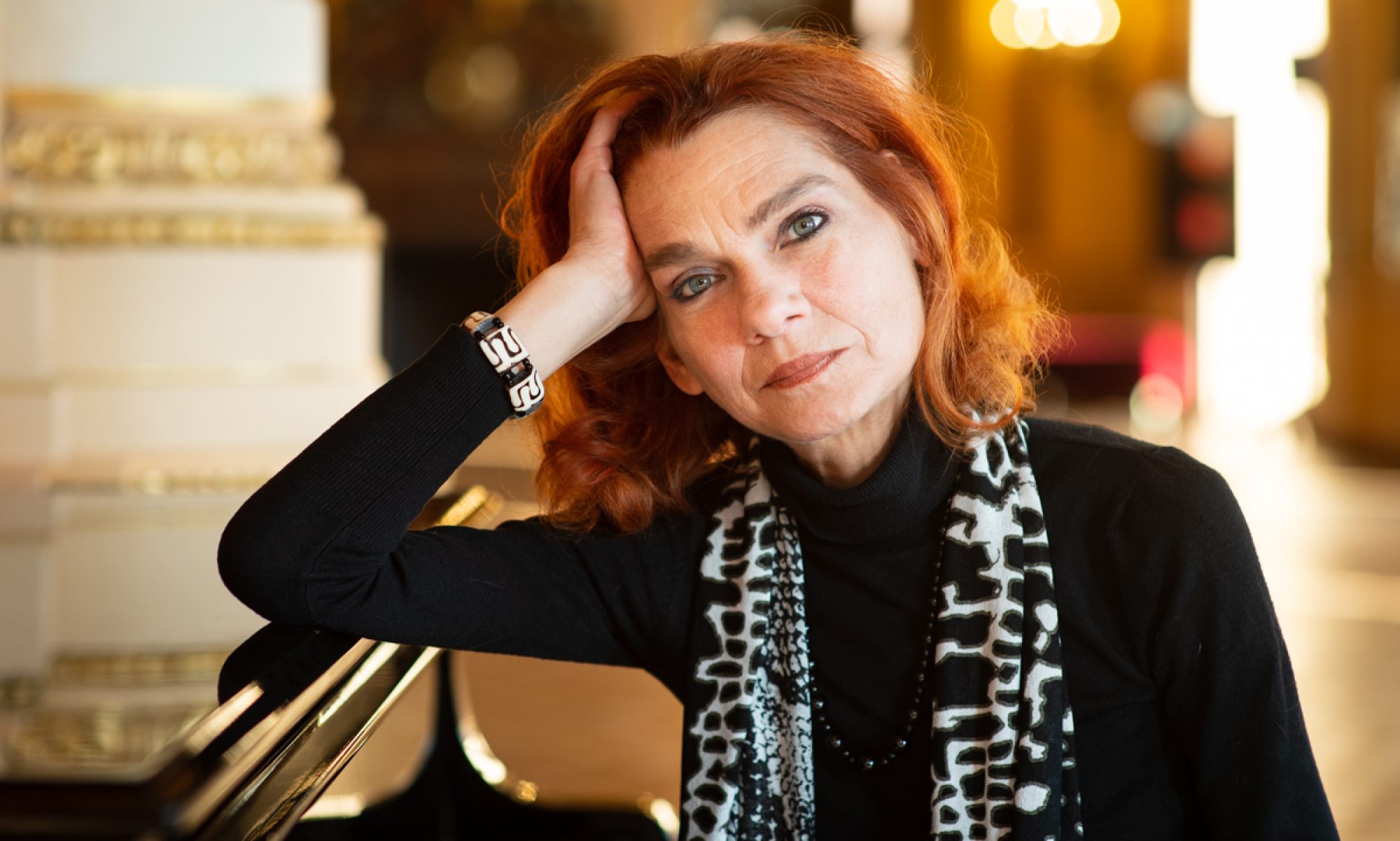
Asli Erdogan revient à Genève. Le 10 mars, l’écrivaine turque sera à la Maison de Rousseau et de la littérature pour une rencontre publique. Elle retrouvera alors un quartier qu’elle connaît bien, la Vieille-Ville et ses rues pavées qui serpentent. Dans les années 1990, elle aimait s’y perdre avant de retrouver la toute petite chambre où elle vivait, après ses longues journées passées au CERN, elle, la jeune physicienne atomique qu’elle était alors, l’une des rares femmes à être acceptées au cénacle de la recherche internationale.
Turquie: Asli Erdogan, la voix des prisonniers politiques
La lumière et l’ombre habitent le quotidien de la romancière et opposante turque Asli Erdogan qui, en mars, publie son tout premier roman, L’homme coquillage (Actes Sud, sortie prévue le 5 avril au Québec), alors que reprend au même moment son procès à Istanbul pour tentative de déstabilisation de l’État. Asli Erdogan a été arrêtée en août 2016 après le coup d’État manqué en Turquie et détenue pendant quatre mois et demi. En cause ? Certaines de ses chroniques (à retrouver dans le recueil Le silence même n’est plus à toi, chez Actes Sud également) et son rôle de conseillère pour le quotidien kurde Özgur Gündem. En liberté conditionnelle depuis un peu plus d’un an, elle a quitté la Turquie. Rencontre avec une auteure qui nous berce d’une écriture chaude, envoûtante, sensuelle dans ce roman de jeunesse, un style qui contraste avec la noirceur de son présent.
https://www.ledevoir.com/monde/europe/521743/asli-erdogan-la-voix-des-prisonniers-politiques
Dieses Gefühl, sein Land zu verlierenAslı Erdoğan im Gespräch mit Leïla Slimani
»Vertriebene sind wir, Verbannte. Und kein Heim, ein Exil soll das Land sein, das uns aufnahm …. Ach, die Stille der Stunde täuscht uns nicht!« Dieser Auszug aus einem Gedicht
stammt von Bertolt Brecht, entstanden in seinem erzwungenen Exil in den USA. Es ist bekannt, wie sehr dieser deutsche Dichter darunter litt, nicht im Land seiner Sprache sein zu können.
Asli Erdogan : “Aujourd’hui, en Turquie, je suis officiellement désignée comme une traîtresse”
Est-ce son écriture poétique, presque hallucinée ? Ou son obstination indomptable à s’élever, dans ses romans comme dans ses articles, contre les hontes de son pays : la torture, l’oppression des Kurdes, les violences faites aux femmes, le génocide arménien ? Grande voix de la littérature turque, physicienne de formation, Asli Erdogan dérange. Qui a lu Le Bâtiment de pierre, roman magnétique et incantatoire sur la prison, ou La Ville dont la cape est rouge, récit autobiographique de ses années d’errance morbide au Brésil, reste à jamais marqué par son écriture libre, intrépide, à fleur de peau. Pour museler sa parole, un matin d’août 2016, des policiers armés et cagoulés ont fait irruption dans son appartement stambouliote.
Aslı Erdoğan: Guest of Honour at the Foire du Livre Bruxelles
Turkish writer Aslı Erdoğan was named as this year’s Guest of Honour at the Foire du Livre Bruxelles in recognition of her outspokenness as a human rights activist as well as her literary excellence. On 22 February, at Bozar she joined Turkish-Kurdish writer and activist Burhan Sönmez to discuss writing in Turkey today.
Aslı Erdoğan was trained as a physicist and began her career at CERN in Switzerland. Perhaps surprisingly, for someone who grew up facing torture and who recently spent five months in prison for her writing, she says that she found her experience at CERN “frightening”. It was a male-dominated, extremely competitive environment that she did not want to participate in. And so, in the 1990s, she found her way to writing.
It was at that time In her column in the Turkish newspaper Radikal that she recorded the rape of three Kurdish girls and found herself at the receiving end of death-threats. Aslı Erdoğan says that unlike a typical columnist, she does not “bang the table” and make noise: she is a storyteller who prefers to leave open questions and to invite the reader to form their own judgements. So when she wrote that one of the girls had been killed and that a post-mortem had concluded she had been violated with a bayonet, she did not expect to have “a cannonball hit me in the face”.
But as Burhan Sönmez affirmed, it is impossible to be a writer in Turkey and not be in trouble with the government. Since 2016, over 180 news outlets have been shut down in Turkey and it is the country with the highest number of imprisoned journalists in the world. Writers such as Aslı Erdoğan and Burhan Sönmez refuse to be intimidated. Talking about his novel Istanbul Istanbul, based in part on his own experience of jail, Sönmez said that he wanted to “write about happiness in the language of pain”. The result is a book that has been hailed as a testament to the power of the imagination.
Asked whether it is really possible to imprison a writer who can always be free in mind, Aslı Erdoğan quoted Tolstoy: that there is no absolute freedom, and no absolute captivity. She reminded the audience that even in Auschwitz, people had written and had made beautiful works of art. Nevertheless, she agreed with Buhan Sönmez’s insistence that while an imprisoned writer may have the right to say they are still intellectually free, those outside prisons must demand the physical liberty of their fellows. She highlighted the case of Ahmet Altan, sentenced on 16 February to life in prison for allegedly supporting the coup attempt in 2016. Aslı Erdoğan called on the international community to show solidarity with Ahmet Altan. She added that the Foire du Livre had already shown solidarity by making her the guest of honour, and that the Turkish regime would have to take notice. By Jamie Osborn / Brussels Express
 Aslı Erdoğan