

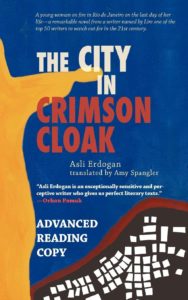
Özgür is poor, hungry, and on the verge of a mental breakdown, with only one weapon against Rio: to write the city that has robbed her of everything. Reading the bits and pieces of Özgür’s unfinished eponymous novel, with its autobiographical protagonist named Ö, Özgür’s story begins to emerge. Meanwhile, the narrator limns a single day of Özgür’s life, which is in fact her last. As Özgür follows Ö through the shanty towns, Condomble rituals, and the violence and sexuality of the streets to her own death, the narrator searches for a way to make peace with life, a route to catharsis. The two concentric novels, the borderline between the two Rio’s — Özgür’s Rio as a metaphor for death and Rio as life — begin to blur. Asli Erdogan’s brilliantly evocative, experimental second novel was a major hit in Turkey and Europe. Now available in translation, the book does for Rio what Joyce did for Dublin.
168 pages
Published September 30th 2007 by Soft Skull Press

 Aslı Erdoğan